
About Us
First Baptist Church
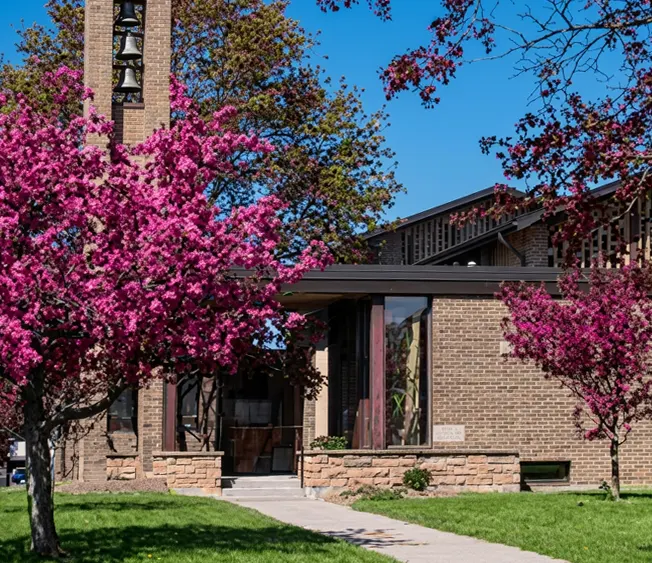
The First Baptist congregation gathers to worship God every Sunday at 10:30 a.m. Worship normally begins with a musical selection played by Music Director, Cory Kuipers, on the church’s Casavant Organ.
Our worship includes songs and hymns, prayers, one or two readings from the Bible, and a sermon based on one of those Bible readings. The preachers at First Baptist help us to apply God’s timeless message of love and forgiveness to the contemporary challenges faced here and now.
Most Christian churches celebrate The Lord’s Supper, also known as Communion or The Eucharist. As is the practice at most Baptist churches, First Baptist includes The Lord’s Supper as part of worship on the first Sunday of each month.
How shall I dress?
You will see a variety of clothing worn by the congregation at First Baptist. The preacher might wear a shirt and tie with a suit or with a clerical robe or gown. A few worshippers will also wear a suit or sports jacket. You’ll also see dresses on some women and a sweater and pants on others. You might also see khakis and a casual shirt or jeans and a T-shirt. In other words, there is no dress code, no dress expectations—you wear what you’re comfortable wearing!
What Do Baptists Believe?
Baptists share many basic biblical convictions with other Christians, including the belief in one God, the Trinity, the human and divine nature of Jesus Christ, and the significance of his crucifixion and resurrection for salvation. Though they have many historic ‘confessions of faith,’ Baptists are not a ‘credal people.’ They prefer simply to affirm the authority of the Scriptures for all matters of faith and practice, and allow each Christian the right to interpret the Bible for himself or herself. However, the distinctive combination of beliefs held among Baptists can readily be identified and has come to be known as ‘Baptist Distinctives.’ In true Baptist fashion, these distinctives are expressed with different nuances by various Baptist groups, and the following describes how CBOQ would express these distinctives.
What We Believe

Jesus is Lord
Baptists believe that Jesus Christ, being eternally God, the only begotten Son, and the visible expression of the invisible God, effectively procured salvation for all creation through his death, burial, and resurrection. He is the one assigned by God the Father to rule with authority over all of creation. Every area of the believer’s life and the life of the church is to be subject to the Lord.
The Word of God is the Authoritative Rule of Faith and Practice
Baptists believe that God communicates his will through the inspired Word of God. For Baptists, the Bible is the final authority in matters of faith and practice. It is to be interpreted responsibly under the guidance of God’s Holy Spirit within the community of faith.
The Priesthood of All Believers
The Bible affirms the value of each person as having been created in the image of God, and also declares each person morally responsible for his/her own nature and behaviour. Baptists believe that inherent in the worth of each person is also the right and competency of each individual personally to deal directly with God through Jesus Christ. This principle also suggests our responsibility to serve other believers in intercession and nurture: we are priests to each other. Baptists believe that no group or individual has any right to compel others forcefully or politically—to believe or worship as they do. Rather, Baptists have historically been champions of religious liberty.
A Believers’ Church
Baptists believe that Jesus Christ chooses to form his church by bringing together believers for the purpose of worship, witness, fellowship, and ministry (both spiritual and social). Baptists recognize the church universal as all who truly profess faith in Jesus Christ as Lord and Saviour. They also profess their understanding of the church as being visibly expressed in local congregations. Each local church must thus be made up of believers who, upon their profession of faith and their baptism (almost always by immersion), are incorporated into the local church through the activity of the Spirit. Baptists believe that Believers’ Baptism and the Lord’s Supper are the two ordinances required by the New Testament and are to be administered by the local church.
Mission and Evangelism
We have a story to tell that is mandated by our Lord in the Great Commission of Matthew 28:19-20. Our calling is to share God’s message of love and salvation with each person. Each Christian has a duty to share their faith with others. Baptists continue to be very active in mission efforts, both in local and global contexts. We recognize that mission is not just evangelism, but also includes promoting justice, social welfare, healing, education, and peace in the world. It is a holistic approach that expresses care for both the needs of the human soul and the social needs that affect all of life.

Church Autonomy and Association
The Bible affirms the value of each person as having been created in the image of God, and also declares each person morally responsible for his/her own nature and behaviour. Baptists believe that inherent in the worth of each person is also the right and competency of each individual personally to deal directly with God through Jesus Christ. This principle also suggests our responsibility to serve other believers in intercession and nurture: we are priests to each other. Baptists believe that no group or individual has any right to compel others forcefully or politically—to believe or worship as they do. Rather, Baptists have historically been champions of religious liberty.
Freedom and Equality
Emerging from our convictions about the priesthood of all believers, we affirm that in Jesus Christ all people are equal. Each one is free to be in relationship with God and to express a faith that is not coerced. Faith cannot be predetermined by someone else, but is the right and responsibility of each individual as they seek a relationship with God based on their own personal commitments. A further extension of the principle of the Lordship of Christ and the priesthood of believers is to be found in the Baptist conviction that there must exist a separation between the church and civil governments.